
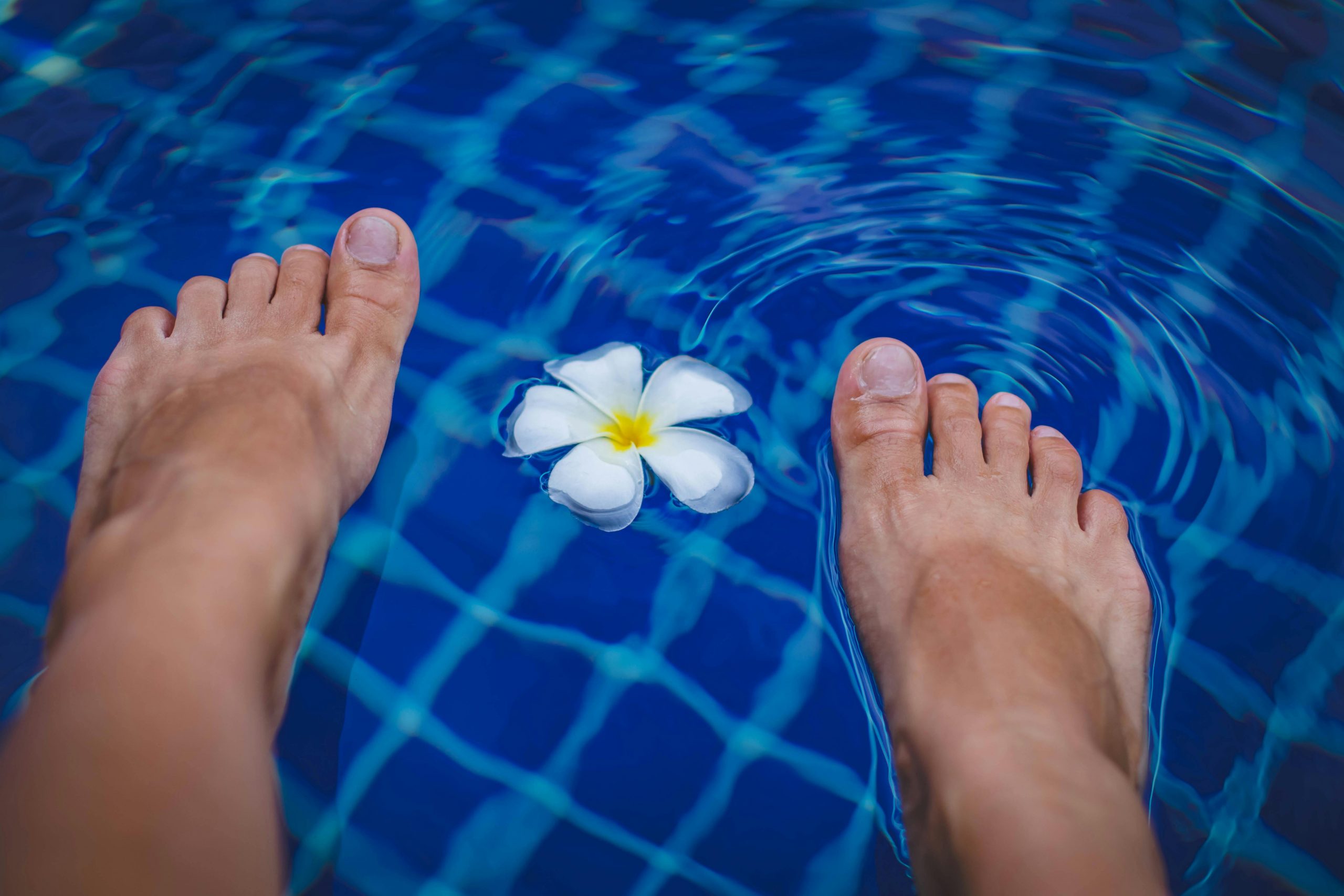
“When your feet hurt, everything hurts.”
— Attributed to Socrates
A few years ago I spent eighteen months dealing with incredibly painful plantar fasciitis. If you’ve had it, you won’t need reminding. If you haven’t, and I sincerely hope you never do, imagine standing on a demonic mix of broken glass, razor blades, and the occasional hot poker for good measure. It became a constant, debilitating companion — like the devil on your shoulder in cartoons, but without the angel on the other side.
That devil had a particular sense of humour. Each morning he’d wait patiently under my bed and drive a flaming trident into the soles of my feet the moment I stood up. The pain was always there — a dull, relentless presence — punctuated by sharp reminders just to keep me alert. I stood behind the chair most days trying to distribute my weight in the least painful way possible. Occasionally a client would notice me limping or comment that I didn’t seem myself. They were right. I wasn’t myself. I was fifty percent me and fifty percent plantar fasciitis. It affected me, my haircuts, my customers, and ultimately my business.
The foot is an incredible feat of engineering — pun fully intended. Twenty-six bones, thirty-three joints, nineteen muscles, hundreds of tendons, and more nerve endings per square centimetre than any other part of the body. It’s our primary point of contact with the ground and feeds vital information to the brain about balance, posture, and movement. And yet, we give it almost no attention at all unless it hurts.
Think about how good it feels to kick off your shoes at the end of a long day, or how often you tell colleagues you can’t wait to get home and put your feet up.
Relief is usually our only interaction with them. But rarely do we consider how the way our feet meet the floor affects everything above them — knees, hips, back, shoulders, even the head.
Subtle changes — and I really do mean subtle — in how weight is distributed through the feet can create significant domino effects throughout the body. A gradual loss of toe mobility, something most of us never notice, can change how the foot moves. That alters our gait, which ripples up one side of the body and often down into the opposite foot. Because these adaptations happen slowly, we usually remain blissfully unaware until pain or discomfort forces the issue.
Standing behind a chair for eight or nine hours a day, six days a week, doesn’t leave much margin for error.
The feet aren’t just something we stand on — they are the foundation everything else is built upon.
When that foundation starts to crack, the rest of the structure feels it. My experience with plantar fasciitis forced me to pay attention, to slow down, and to rethink something I’d taken for granted for decades.
This isn’t about becoming obsessive or chasing perfection. It’s about awareness. About respecting the body parts that quietly do the most work and ask for the least credit. If this piece does nothing more than encourage you to notice your feet — how they feel, how they move, how they support you — then it’s done its job. Sometimes longevity in this craft starts from the ground up.